Source aluminum oil cooler sandwich adapter for BMW, Mini, and Universal cars
Compare 30 listings for the aluminum oil cooler sandwich adapter from verified suppliers in China. Buyers can review specifications like material, size, and certifications to find suitable parts for repair or replacement in various vehicle models.
Key considerations
Products List




Comprehensive Sourcing Guide
Strategic Sourcing Guide for Aluminum Oil Cooler Sandwich Adapters
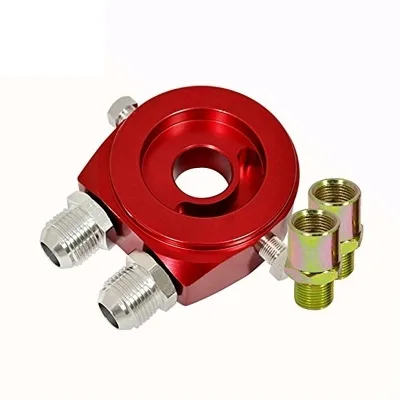
Procuring high-performance automotive components requires a disciplined approach that balances technical precision with supply chain reliability. The aluminum oil cooler sandwich adapter represents a critical interface in engine cooling systems, designed to integrate auxiliary cooling units without modifying the engine block. Buyers entering this market must navigate a landscape defined by specific material requirements, universal fitment challenges, and rigorous quality standards. This guide synthesizes observed market data and technical specifications to provide a robust framework for sourcing these components effectively.
Technical Specifications and Material Integrity
The foundation of a reliable sandwich adapter lies in its material composition and structural design. Market observations indicate that the primary body material for these components is predominantly aluminum, specifically noted as "Aluminum" or "Alloy Aluminum" in product listings. This material choice is driven by the need for high thermal conductivity and corrosion resistance, which are essential for maintaining optimal oil temperatures under varying engine loads. While some listings mention steel as a body material, the core keyword focus on aluminum suggests that aluminum alloys are the preferred standard for performance applications due to their superior weight-to-strength ratio.
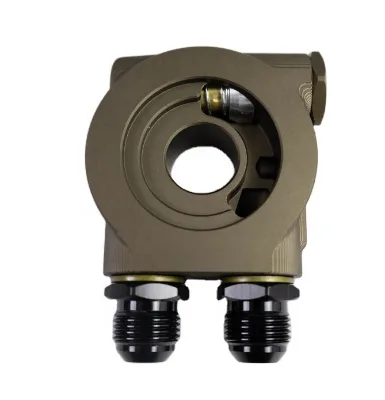
Structural integrity is further defined by the connection method. The "Screw Type" structure is a common specification observed in the supply chain, indicating a bolt-on design that ensures a secure, leak-proof seal between the engine and the cooler. The dimensions of these adapters are typically described as "OEM Standard" or "14X11X4cm," suggesting that manufacturers aim to replicate original equipment manufacturer (OEM) tolerances to ensure compatibility. However, buyers must verify that the specific dimensions match their vehicle's mounting points, as "Universal" fitment claims often require additional verification of thread pitch and flange geometry.
The cooling mechanism associated with these adapters often involves an "Air-cooled" style, which relies on airflow to dissipate heat from the oil passing through the integrated cooler. The core type is frequently identified as "Tube-fin," a design that maximizes surface area for efficient heat exchange. When sourcing, it is imperative to confirm that the adapter's internal passages align with the flow requirements of the specific oil cooler being installed, particularly regarding the "Direct-flow" radiator type mentioned in related product data.
Compliance, Certification, and Quality Standards
In the B2B automotive sector, compliance is not merely a formality but a prerequisite for market entry and liability protection. Reputable suppliers in this category often hold certifications such as ISO9001, ISOCE, and TS16949 (now IATF 16949). These certifications indicate that the manufacturing facility adheres to international quality management systems and specific automotive industry standards. The presence of "TS16949" in supplier data is particularly significant, as it validates the supplier's ability to produce parts that meet the rigorous demands of the automotive supply chain.
Quality assurance extends beyond certification to the physical condition of the product. Listings consistently describe these adapters as "New" and of "High Quality," but buyers must treat these as observations rather than guaranteed attributes for every unit. To mitigate risk, procurement teams should request third-party test results or material composition reports that verify the alloy grade used. The "Alloy Aluminum" designation implies a specific metallurgical mix, but without explicit data on the alloy series (e.g., 6061 or 5052), buyers should verify the material's tensile strength and thermal expansion properties to ensure they meet the thermal stress requirements of high-performance engines.
Furthermore, the "Customization" attribute is available in the market, suggesting that suppliers can adapt designs for specific applications. However, customization introduces variables in quality control. Buyers should ensure that any custom modifications maintain the structural integrity of the screw-type connection and do not compromise the "OEM Standard" dimensions that ensure proper fitment.
Cost Drivers and Pricing Dynamics
The pricing of aluminum oil cooler sandwich adapters is influenced by several factors, including material costs, manufacturing complexity, and order volume. The observed price range in the market spans from $0.20 to $1000 USD, a vast disparity that reflects differences in quality, brand positioning, and specification complexity. The lower end of this range likely corresponds to generic, universal-fit components with minimal branding, while the higher end may include specialized, high-performance units with advanced certifications or custom engineering.
Order Volume is a primary cost driver. The Minimum Order Quantity (MOQ) varies significantly across suppliers, with observed ranges from 1 piece to 1000 pieces. Some listings specify an MOQ of 1 PCS, catering to individual repair needs or small-scale prototyping, while others require 10 or 20 pieces, targeting bulk procurement for repair shops or distributors. Buyers must align their order volume with their inventory strategy to optimize unit costs. For instance, an MOQ of 50 PCS per carton suggests a standardized packing method that may reduce shipping costs for larger orders but increases the upfront capital requirement.
Payment terms also play a role in the total cost of ownership. Standard terms observed include T/T (Telegraphic Transfer) and PayPal. While these methods offer flexibility, buyers should negotiate terms that protect cash flow, such as partial payments upon order confirmation and balance upon shipment. The "Black Box" or "Neutral Packing" options can also impact costs, as specialized packaging may incur additional fees compared to standard cartons.
Typical Applications and Fitment Considerations
The primary purpose of these adapters is "for replace/repair," making them essential for both maintenance and performance upgrades. The "Universal" designation for car models and car makes indicates that these adapters are designed to fit a wide range of vehicles, from standard passenger cars to high-performance models like the BMW G80 M3 and G82 M4. However, the term "Universal" should be interpreted with caution. While the adapter may physically fit multiple engines, the specific thread configuration and oil flow requirements must match the target vehicle's specifications.
Applications extend beyond simple replacement to performance enhancement. In racing or high-performance street applications, the adapter serves as a critical link for installing larger oil coolers to manage increased thermal loads. The "Intercooler" and "Oil Cooler" product types listed in the market data suggest that these adapters are often part of a broader cooling system upgrade. Buyers should verify that the adapter is compatible with the specific "Radiator Type" and "Cooling Fluid Type" of their intended setup. For example, while most systems use standard engine oil, some specialized applications might involve different fluids, requiring specific material compatibility checks.
The "Cold Style" of "Air-cooled" systems is particularly relevant for track use, where airflow is maximized. The adapter must be robust enough to handle the vibration and thermal cycling associated with these environments. The "Screw Type" structure ensures a secure connection, but buyers should verify the torque specifications and thread engagement depth to prevent loosening under high-stress conditions.
Supplier Evaluation and Sourcing Strategy
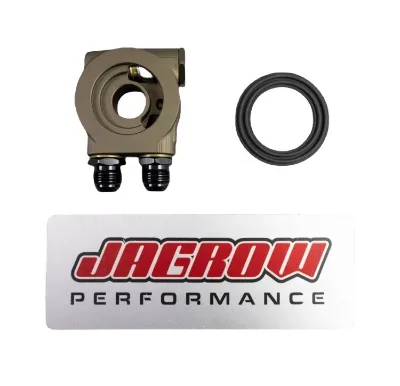
Evaluating suppliers requires a focus on location, production capacity, and communication. The "Place of Origin" for many of these components is Anhui, China, a region known for its manufacturing capabilities in automotive parts. While this location offers competitive pricing, buyers must conduct due diligence to ensure the supplier maintains consistent quality standards. The "JAGROW PERFORMANCE" brand name appears in the market data, but buyers should not limit their search to a single supplier. Instead, they should evaluate multiple vendors based on their certification status, response time, and ability to provide technical documentation.
When assessing suppliers, buyers should look for evidence of the "High Quality" claims through verifiable data. Requesting samples is a critical step in the evaluation process. Samples should be inspected for surface finish, dimensional accuracy, and material consistency. The "12 Months" warranty period observed in the market is a standard benchmark; buyers should ensure that the warranty terms are clearly defined and cover defects in material and workmanship.
Communication regarding the "Customization" options is also vital. Suppliers that offer customization should demonstrate a clear understanding of the buyer's technical requirements. They should be able to provide detailed drawings and specifications for any modified parts. The "Standard" of "50PCS ONE CARTON" indicates a specific packing protocol, which buyers should confirm aligns with their logistics capabilities.
Quality Control and Long-Term Procurement
Ensuring long-term success in sourcing these components requires a robust quality control (QC) process. Buyers should implement a multi-stage QC strategy that includes pre-shipment inspections and post-delivery testing. The "New" condition of the products must be verified upon receipt to ensure no damage occurred during transit. Additionally, the "Packing" method, whether "carton," "Black Box," or "Neutral Packing," should be inspected to ensure it provides adequate protection against corrosion and physical damage.
Long-term procurement considerations involve building a relationship with suppliers who can scale with demand. The "MOQ" of 10 to 20 pieces suggests that suppliers are flexible, but buyers should plan for future growth. As demand increases, the ability to maintain consistent quality and delivery times becomes paramount. Buyers should also monitor the "Certification" status of their suppliers, ensuring that ISO9001 or TS16949 certifications remain valid and that the supplier continues to adhere to these standards.
Finally, buyers should consider the "Water Temperature Sensor Type" and other related components when sourcing adapters. While the adapter itself is the primary focus, its integration into the broader cooling system affects overall performance. Ensuring compatibility with "Digital Type" sensors or other electronic components can prevent system failures and ensure optimal engine operation. By maintaining a disciplined approach to sourcing, focusing on verified specifications, and prioritizing quality over price alone, buyers can secure reliable aluminum oil cooler sandwich adapters that meet the demands of modern automotive applications.
FAQs
What material is used for the aluminum oil cooler sandwich adapter?
The primary body material is aluminum or alloy aluminum, chosen for thermal conductivity. Some listings mention steel, but aluminum is the standard for performance applications due to its weight-to-strength ratio.
Can I find universal fitment for this adapter across different car models?
Yes, the product is listed as universal for car models and makes. However, buyers must verify thread pitch and flange geometry to ensure compatibility with specific vehicle mounting points.
Which certifications should I look for in a reliable supplier?
Reputable suppliers often hold ISO9001, ISOCE, and TS16949 certifications. These indicate adherence to international quality management systems and specific automotive industry standards required for liability protection.
How does the screw type structure affect the installation process?
The screw type structure ensures a secure, leak-proof seal between the engine and the cooler. It requires verifying torque specifications and thread engagement depth to prevent loosening under high-stress conditions.
What is the typical minimum order quantity for these adapters?
The minimum order quantity ranges from 1 piece to 1000 pieces depending on the supplier. Some listings specify an MOQ of 1 PCS for repairs, while others require 10 or 20 pieces for bulk procurement.
Where are these aluminum oil cooler sandwich adapters typically manufactured?
The place of origin is frequently Anhui, China, a region known for automotive part manufacturing. Buyers should conduct due diligence to ensure consistent quality standards from suppliers in this location.
Can suppliers offer customization for specific engine requirements?
Yes, customization is available in the market for adapting designs to specific applications. Buyers should ensure any custom modifications maintain structural integrity and do not compromise OEM standard dimensions.